Showing posts with label Album. Show all posts

Sunday, June 12, 2011

I Can Hear Music

http://img19.echo.cx/img19/633/carlpic9de.jpg

I can hear music
Sweet sweet music

All three of the Wilson brothers were talented singers and musicians; Brian had that great falsetto, Dennis the husky, textured voice, and Carl-- the perfect-pitched choir boy-- a voice almost painful at times in its sweetness.

"I Can Hear Music," from the album 20/20 (notable for the inclusion of the Smile session tunes "Cabinessence" and "Our Prayer") was Carl's first go at being the leader of The Beach Boys in his oldest brother's absence. While 20/20 is an odd, transitional album (check it out at allmusic.com), it contains gems.

The attractiveness of "I Can Hear Music" --a song one Mr. Spector was involved in writing, and which was originally recorded by The Ronettes-- is largely due to Carl's singing and production of the track. Other versions of the song are just not as compelling. The Beach Boys' version has a wall of sound feel at the beginning, with sleigh-bells, drums, and the guys' harmonies filling up the track. Layer Carl's soulful vocal over that, and it's two and a half minutes of perfection.  A romantic song, originally sung from a woman's point-of-view, is totally believable in Carl's hands. "I Can Hear Music" is a song that makes being able to hit the repeat button immensely satisfying.

Loving you, it keeps me satisfied
...
the sound of the city seems to disappear

Saturday, April 9, 2011

Let England Shake


http://static.nme.com/images/blog/PJHarvey02PR221110.jpg
Each of PJ Harvey's albums is nothing short of brilliant.

I'm a dyed-in-the-wool loyalist to Artists I connect with on a deep level; if I don't get an album immediately, it is my job to sit with it and learn to hear what it has to say. Unlike some Harvey albums, it's obvious from the start that Let England Shake is something special, and it's exhilarating that every listen continues to astound and deepen my appreciation for this masterpiece.

This a complicated album. Among it's themes are life and death, distance and proximity, the destructive forces of man and nature, loyalty and self-preservation, and the nature of time. Joy and tragedy are present on an album that is both immediate and universal, and features the most concrete images Harvey has ever written.

Sticking to the sonic realm, one of the first things that hits the ear with this album is the dissonance, the slightly off-kilter quality of many of the tracks. Sometimes it's the high vocal against warm guitar chords, sometimes an underlying track (trumpet on "The Glorious Land," a woman's vocal on "England") juxtaposed with the main track, or just the collective din of chimy, scratchy, jangly, and fuzzy instruments ("Let England Shake" is a great example). This makes the moments of pure melody, a bass line, a harmony, all the more moving (the bass line on "The Last Living Rose," a simple piano line in "On Battleship Hill," just kill me).

In this bed of occasional cacophony, pinpoints of dazzling beauty, and sporadic, irresistible sing-a-longs, are tucked lyrics of deceptive complexity. The simply worded and emotionally evocative song, "The Colour of the Earth," captures a heartache, a powerlessness, that the music itself doesn't allow to resolve.

Louis was my dearest friend
fighting in the ANZAC trench.
Louis ran forward from the line,
I never saw him again.

Later in the dark
I thought I heard Louis' voice
calling for his Mother, then me,
but I couldn't get to him.

He's still up on that hill.
20 years on that hill.
Nothing more than a pile of bones,
But I think of him still.

If I was asked I'd tell
the colour of the earth that day;
it was dull and browny-red
"the colour of blood" I'd say.


It's no secret that PJ Harvey grew up in the country, amidst animals, and there's not one song on this album that doesn't mention nature or death. While many city dwellers (myself included) can spend years pretending that death and decay aren't all around (as well as in bellies and guts), it just can't be done on a farm. It's not surprising then-- in addition to the psychological and spiritual aspects-- that Harvey is comfortable exploring the physical landscape of death and war.

The scent of Thyme carried on the wind.
Jagged mountains, jutting out,
cracked like teeth in a rotten mouth.
-"On Battleship Hill"

Bitter branches spreading out.
There is none more bitter than the wood.
Into the white world it grows,
twisting its roots, a swarm of bees,
twisting under soldier's feet.
-"Bitter Branches"

I have seen and done things I want to forget;
soldiers fell like lumps of meat,
blown and shot out beyond belief.
Arms and legs were in the trees.
-"The Words that Maketh Murder"

What Harvey so powerfully conveys is the absolute matter-of-factness of violence, the shock of it, and that it somehow means everything and nothing at the same time. Life continues as it has always done, and this violence is a part of it.


Harvey's lyrics steer the minds' eye like a film director. The pointedness of her gaze, the imagery she uses, would be auteur-like if Harvey hadn't done such a fabulous job of finding the voice of the characters. (Her mastery will come as a surprise to those who've assumed that she is exactly like all the characters she's sung before.)


Another intriguing aspect of Let England Shake is the use of birds as the central visual theme. Not only does the cover of the album feature a flock of birds (they look like seagulls) flying haphazardly, her outfits for this album incorporate feathers.

https://blogger.googleusercontent.com/img/b/R29vZ2xl/AVvXsEiTayEQ804eqpqBB7pzDj162omJX6OgEvZbutcgpPCNH6KFBmplS6Lt58qSe3GCTKwxJeRTRaTzXgpa8BRUojdkoxZ6EOG4_02upaxLZa32qi1nAz3GWsblBQMF-bTKnd0XdXfQLH-D7wVg/s1600/Q_Mag_Feb11.jpg

http://www.littleoslo.com/lye/home/wp-content/uploads/2011/02/Let-England-Shake.jpg


From what I can tell, seagulls (as they are used in the British Isles) are meant to represent freedom (as opposed to the raven or blackbird which represents death). On this album, birds are described as being silenced.

...the birds are silent in the branches
-"Let England Shake"

There are no birds singing
the 'White Cliffs of Dover'
-"Hanging in the Wire"

Freedom, or innocence has been put to death. (Psst- is possible that the germ of this idea started as "Untitled (Seagulls)" from Uh Huh Her?) This isn't surprising in the landscape of war, that England finds itself without innocence, right down to the children:

And what is the glorious fruit of our land?
Its fruit is deformed children.
And what is the glorious fruit of our land?
Its fruit is orphaned children.
-"The Glorious Land"


One of the most amazing things about Let England Shake is that amidst the vivid images of death, decay, and brutal reality, there is a real desire for joy, a sense of tenderness in the lyrics and music.

Let me watch the night fall on the river,
the moon rise up and turn to silver,
the sky move,
the ocean shimmer,
the hedge shake,
the last living rose quiver.
-"The Last Living Rose"

In the immediacy of grief there is warmth, in helplessness connection. These songs of Harvey's homeland could be the songs of my homeland. There can be no sorrow without love. It takes an artist of the highest order to fully realize these tensions.


https://blogger.googleusercontent.com/img/b/R29vZ2xl/AVvXsEjkv3ckRQy3nZ2O2NsgCJP_nIJidalyA6SC6mJ9tqu3DxS6r4ZgHSK_jfhdrQtNiaPEh7PrYWzEh9gGgUCvsXe4SRvF-L6s88ab_SY5ax03mwWJ9Ltb7i40rDtloQ59K8-_Tb90uv0wsbFS/s1600/taki+bibelas.jpg

Sunday, March 13, 2011

Stories From the City, Stories From the Sea


http://farm3.static.flickr.com/2365/2093218682_3a7285bd49.jpg
PJ Harvey, April 15, 2001 at the Rose Garden.


April 15, 2001. Easter Sunday. MY FIRST ROCK CONCERT! My first trip on the MAX. What a great night. PJ Harvey opened for U2. Bono sang "I Remember You," dedicated to Joey Ramone, who had just passed away earlier in the day.
*     *     *

PJ Harvey, glorious music goddess. If I had to narrow it down to one artist/band to love and listen to for the rest of my life, it would be her. But I've got to set the stage for my completest obsession and total admiration for this artist.

One of the great things that I've discovered about getting older, is my increasing ability to ask questions. Sometimes those questions are "why?" or "why not?" (Thanks, Yoko! Check out these two fantastic Plastic Ono Band songs if you like Experimental/Punk music!). Questions that began to plague me during my freshman year in college: 

Why don't I have any female musicians I can fully identify with?
I'm just not a big pop/folk fan. These genres contain the most easily accessible female artists in our culture. I hear tell there's some sexism in the music industry...and I'm not going to spend time talking about it, because the person who can't see it is missing their eyeballs.

Asking this question helped me see sexism for what it is-- not just in music, but everywhere.

Where can I find out about female musicians?
DIY at its best. Headed my little lonesome down to Powell's on Burnside, of course. I owe these two gems for giving me history and leads. I owe Napster for letting me sample before spending my dough.

http://ecx.images-amazon.com/images/I/61muTluTB0L.jpg
I LOVE this book cover.


http://ecx.images-amazon.com/images/I/51QQ3GR6PRL._SL500_AA300_.jpg
O'Brien is an awesome writer.


Who is speaking for me about my experience as a woman in this world?
A man sure can't. This question sent me running on my marathon of musical discovery. I'm still going! I'm still discovering!

So where does PJ enter into things? 

Maybe I will bring an imaginary child into this story. I will name her "imaginary daughter", or Id. ;)

My daughter, Id, when young girls become young women, they find that there is a fire that burns within them. For many, they turn the fire against themselves, and burn all the things that the world does not like. If this were so, you might see a woman who has strong feelings become a woman who tears down other women that have strong feelings. A woman who will fawn and preen in order to impress, and never ask herself what she feels or thinks in her hidden heart. She will burn herself forever, like a lump of coal in hell. For other girls, they turn the fire outward, they are filled with anger that the world does not like who they are. Sometimes the currents of the world turn the fire back on its owner, and she must let the fire roar even larger to make a space within her for the new growth of her person-hood.

Your mother was a violent young woman; she was meek and quiet, and had her nose stuck in a book most of the time, but when she was on the basketball court, even the 6'4" girls had a tough time making a lay-up. 

Your mother's anger made room for her to learn to speak with the voice she lost when she was a teenager.

I hope she will nod sagaciously.

My corps of discovery grew as I explored. Jeff Buckley walked me to a parking meter where I met Patti Smith, Nico sat with me in a smoky den (she did not offer me drugs!), Tori held my hand, Bjork invited me to belt out songs with her, and many other women told me their stories. PJ Harvey awaited me ahead.

I met her at the Rose Garden Arena, my first real rock concert. After a day on Burnside, a hitch on the MAX from 2nd Street and over the river, I was vibrating in anticipation of seeing U2. My friend and I handed our tickets to the dark-haired ticket dude, and wandered into the coliseum where we could hear the opening band already playing. After gawking at the U2 paraphernalia (some "after" pics can be seen on my FB) we wandered up to the nosebleed section where our seats were located. I could practically reach up and touch the ceiling.

A song has finished, and another is beginning. I look to the stage.

There she is, in her glittering miniskirt, her shiny stiletto boots, an iridescent v-neck top, and a guitar that might be bigger than her. Her voice sinks me into my seat. She owns my attention while people all around me chatter as though the ground has not moved from under us, as though she is not throwing sonic arrows deep into our hearts. I remember thinking, "What is wrong with these people? How can we do anything but listen?" And for the first time someone is speaking to me on a primal level that totally connects, that brings forth the visceral feelings of violence, passion, desperation, tenderness into one cohesive force that fills me to brim over.

This is the song I heard. (This live version is from later in 2001, and she's wearing the same boots/skirt from when I saw her.)


I remember her voice, the songs she sang even though I'd never heard them before. I was beguiled by her high notes, her growls, her ferocious intensity. And yet, she had the power to be vulnerable, too, and emotionally honest.


PJ doesn't play the audience on sex appeal-- her appeal is a by-product of her confidence, of her musical conviction. She is PJ Harvey on no one else's terms. She does not waste time addressing her songs to the male gaze, as most female pop-stars do. Her songs and videos on this album really capture her gaze.

I bought the promo video for "This is Love" on ebay and watched it more times than I can count. This is a woman who is totally comfortable with herself and performing and singing on her own terms. I can't get enough. (I regret to inform you that the following video is cut off at the end, which reduces its awesomeness, but it's the best I could find on the web.)


One of the many appeals of PJ Harvey is that she is a woman who dares you to look her in the eyes. She doesn't blink.

I love her for this.

I love that her music cuts to the bone, that it can be menacing in it's naked honesty, that it can express joy and the exhilarating feeling of what it means to be alive or in love.

Her music helps me connect to what it means to be me in all shades of expression and experience, without judgment.

PJ Harvey changed my life.


*     *      *
 
Finally, here is a song-- from the year I fell in love with Ryan-- that means a lot to me.


Another picture of my favorite woman, from the fateful night of April 15, 2001.

http://farm3.static.flickr.com/2218/2092439757_176f0de25c.jpg

Saturday, February 19, 2011

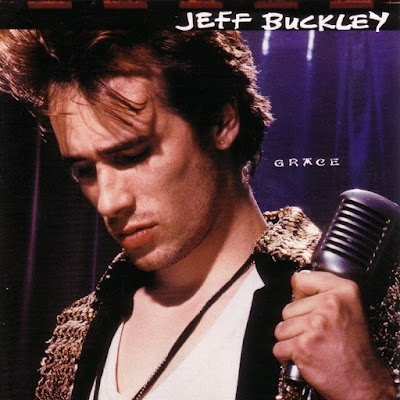
Grace


http://images4.tescoentertainment.com/Assets/102009/jeff_buckley___679728.jpg


Just before the days when Napster's glory lit up the fiber-optics, BMG and Columbia House CD clubs were in full swing. I watched and waited for all the special deals, squeezing as many CDs as I could out of my summer job taking care of grade schoolers at Emerald Park. When a nine year-old kid stabbed me in the eye with his index finger as he spun on the merry-go-round, I could say to myself that the money I was earning would go directly into feeding my ravenous music appetite.

What those music clubs afforded me was discovery and experimentation in a time when there were no other options. MTV wasn't playing The Smiths and New Order, there wasn't an iTunes, and there was no way to hear a sample of a song online. If I heard a tune I liked in Some Kind of Wonderful or Pretty in Pink, I'd turn to the BMG catalog and figure out how to get it into my discman!

I found out about Jeff Buckley in a rather benign way. I read about Grace in the CD World insert in the Eugene Weekly, was intrigued by the review and the story of his death, but hearing nothing else dismissed him. The summer of 2000, the year of my high school graduation, was the summer I got a job working at Fred Meyer Photo Electronics. Most of you know this is significant because it's where I met Ryan. Yes, Mr. Crush was working there. In fact, it was in a conversation with Ryan that I was reminded again of Jeff Buckley and finally decided to get his album.

I think that conversation went something like this:

*     *     *

Photo-electronics, fluorescent lighting, black counter-tops, one-hour machine humming, the smell of chemicals.

I'm standing next to Register 1. "So Ryan, you're into music. What kind of music do you like?"

Ryan walks a few steps down towards the one-hour machine, files a film envelope in the correct drawer. I see him beginning to get a smirk on his face, and I can now identify that look as "I'm gonna lay a really good one on ya".  He says, "Good music."
*     *     *

I'm smiling right now as I read that last paragraph. Silly Ryan. Needless to say...

...Disintegration, Head on the Door, and Grace came in a cardboard mailer soon after. I walked back from the mailbox with a skip in my step, and a neighbor I'd played with since we were kid shappened to walk over to check out the cds I'd gotten. It was hard to know what to make of a song called Mojo Pin, and he and I laughed as we stood by my dad's beat up F-150.

The summer before leaving home, the summer of having my first customer-service job and meeting Ryan, was a summer of both withdrawing from and trying to connect with my family in our small house. On one hand, I'd lock myself in my bedroom-- plastered from floor to ceiling with pictures of musicians I loved-- to read, watch late night comedians and movies, and stay up as long as I could. On the other hand, I'd throw a new cd on in the living/dining room (the place to hang out in the house) to try to share the experience with everyone.

I remember throwing Grace on while I was sitting at the dining table. The most intimate, seductive voice rose up out of the stereo-- I could brush that off as not being too awkward-- but that voice wrapped my attention around itself like I was a scarf it could throw around its neck. "Mojo Pin" familiars will realize I was in for some serious noise and crescendo in a few seconds. I popped the cd out of the player, pushed my wooden chair back in to the table, and walked down the hall to my room. I'd just save that cd for later.

Much playing of Grace ensued. I didn't really understand the album immediately, or even necessarily love it...but I felt like I should keep listening til I got it. Pretty soon I couldn't bear to go a day without listening.

Before I left for college at Lewis & Clark, I sent the remote-controlled stereo I'd gotten when I had mono ahead of me via the mail. I did a week of service projects in Portland (through Lewis & Clark) before starting school in early September, and arrived to campus with the friends I'd made while doing a wide range of things from feeding the homeless to clearing invasive species from underbrush in a park. We'd slept in an old church in North Portland, snuck around in the pitch-dark playing sardines, and showered at the YMCA down the street. I remember stepping inside the entrance to my dorm complex with the whole group, wandering through the maze of halls to find my room. They cheered me on as I unlocked the door and found awaiting me the shipping box holding my stereo...I was home.

Of course the Grace cd came with me to Portland...but the music was accompanying me in every aspect of my life. One of the first friends I made was because I had cranked up Grace to an only-a-college-kid-in-a-dorm pitch; he came running into my room, eyes wide, exclaiming, "Are you playing Jeff Buckley??!!" and gave me a giant hug.

I found myself singing the opening to "Mojo Pin" while doing laundry in the pleasant acoustics of the basement. My journeys into record store land are marked by Jeff Buckley singles, my foray into vinyl by the purchase of a new copy of Mystery White Boy. When we had to do a project for my Blues class incorporating music we loved, it was Jeff without hesitation. Everyone knew I was the freshman that was obsessed with music. I was always so, but Jeff pushed me to another level.

This album occupied my poetry, my thoughts. What was so alluring?

Amidst the exhilaration of wandering downtown Portland every weekend in search of music, staying up all hours talking with new and wonderful people, learning what I wanted to learn, taking a poetry class, the freedom to do what I wanted when I wanted...I was sad.

My first roommate was never around, my best friend and eventual second roommate (after the first one moved out) was clinically depressed and dependent, I missed my family and pets and worried about my dog passing away while I was gone, and I was stupidly, inescapably missing Ryan. I felt like I wasn't connecting to anyone satisfactorily enough. Strangely, I didn't even realize that I was depressed at the time. 

Jeff Buckley's open arms welcomed me, I had (and even now) every nuance and note of that album memorized. Perhaps I was hearing some of the things that I couldn't articulate, some of the things I didn't know were inside my own head. He could sing with ferocity, with absolute honesty, about tenderness, partings, desperation, and somehow transcend it with hopefulness. His optimism seems so obvious to me. Here was a man who loved living but had no illusions about his own imperfection, the inevitability of parting, death.

With his music I could admit to feeling things nobody around me seemed to understand:

"But tonight you're on my mind so
(You'll never know)
I'm broken down and hungry for your love
With no way to feed it
Where are you tonight?"
-Lover, You Should've Come Over


And any time when the jaunty swagger was required, when I felt free and ready to take on the world, there were lines like this to be had:

"All I want to do is love everyone... 
There's no time for hatred, only questions...

And I've get a message for you and your twisted hell
You better turn around
And blow your kiss goodbye to life eternal, angel...
"
-Eternal Life

This album has been cited by innumerable artists as influencing them, and deservedly so. It's not a perfect album, but perhaps the growing pains of Grace are like the growing pains so many of us know? Striving, reaching out, filled with yearning for what is lost, afraid of having our hearts crushed, and yet offering our hearts again and again. I want to keep living like this, to keep offering my heart.

What we must do is sing the songs of our loss, sing our fear and imperfection, and keep on loving.
"...Be the kind of person who is naturally powerful, positive, ingenious, open, to the highest degree, but with no interest in coersion or pressure or power over other people..."- JB


http://userserve-ak.last.fm/serve/_/6958005/Jeff+Buckley+x.jpg

Tuesday, February 15, 2011

The Joshua Tree

http://u2fanlife.com/wp-content/uploads/2008/06/bono-with-or-without-you-video.jpg

I first heard a U2 song on the radio in 6th grade. I remember this very clearly: it was about midnight, I was cuddled in my blankets on my twin bed, and I had my brand new black Sony cassette stereo tuned to 104.7. I was waiting for something good to happen. On comes a little number-- I later discovered to be called Pride (In the Name of Love)-- with lyrics that are startlingly spiritual and vocal that's sincere and passionate. I have no idea who it is. At a sleepover later that year I mention the mysterious song to a friend, she crinkles her brow and dips her head, "That's U2." Was it ever cool to like them? I'll never know...I mean this was 1994 for goodness sakes.

1994-5 (7th grade) passes in the arms of The Cranberries, Erasure, and the Pet Shop Boys. I spend a lot of time appreciating dance music from the early 90s. I avoid Marilyn Manson. I try to find Christan music that doesn't stink (Plankeye was cool).

1996 rolls in, and my brother tapes me a copy of The Joshua Tree. If you pour through my tapes of music recorded off the radio, you'll see this isn't totally out of the blue-- I taped nearly all the singles from The Joshua Tree and Achtung, Baby (right alongside such lasting gems as "What is Love?" and "One Headlight").

It was very exciting to have an older brother out of the house and living in a co-op; I remember sitting in a bean-bag chair in Brendan's room, listening to The Joshua Tree, pouring over the lyrics booklet from the CD, and feeling like I was really onto something big, like I was stepping outside of time. I don't think it makes sense for a fall in Oregon, but I remember the sun shining through the window, casting light across the carpeted floor and onto my feet.

Nobody needs me to declare this album a classic. These songs light up the sky like the North Star for innumerable people. And yet...The Joshua Tree, familiar to millions, is stored in safe-keeping in my heart.

Some songs wrapped themselves around me like the green jacket I just couldn't stop wearing in 7th grade.

Some songs helped me understand what was going on inside my body, inside my heart.

"Where the Streets Have No Name" encouraged me to be fearless in my desire to know and be known.

"I want to tear down the walls
That hold me inside
I want to reach out
And touch the flame"


"Running to Stand Still" and "Bullet the Blue Sky" moved me beyond my limits of knowledge and understanding, forced me to ask questions, do research, think meta-cognitively.

"Exit" filled me to the brim with the love of poetry, the intensity of simplicity.

"He went deeper into black
Deeper into white
Could see the stars shining
Like nails in the night"

"Mothers of the Disappeared," born of compassion, was fittingly played during the aftermath of the Columbine shooting and entwined itself with my peers stolen from life.
"In the wind we hear their laughter
In the rain we see their tears
Hear their heartbeat
We hear their heartbeat"


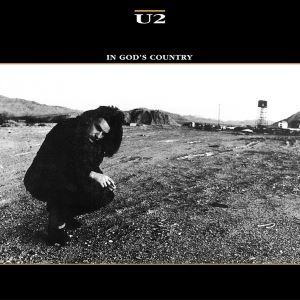
Some songs greet me with their meaning in my adulthood, open new doors of understanding and welcome me in. "In God's Country" is a prime example of this. It has always been a particular favorite, one I felt I identified with but never understood why. I sensed eternity and mortality warring with each other inside that song, and the older I get the more I understand what that war means in each of our lives, the daily struggle of faith, hope, idealism, and the easy death that awaits them. I am sure I will revisit this song for further discussion.

"Set me alight
We'll punch a hole right through the night
Everyday the dreamers die
See what's on the other side"


Songs like "Bullet the Blue Sky", "One Tree Hill," and "In God's Country" challenge me to be more than I am now...to fight la lucha against injustice everywhere, to fight against the injustice here in America...

"Across the field you see the sky ripped open
See the rain through a gaping wound
Pounding on the women and children
Who run
Into the arms
Of America"
-Bullet the Blue Sky

 ...and my own human heart.

"I have spoke with the tongue of angels
I have held the hand of a devil
It was warm in the night
I was cold as a stone"
-I Still Haven't Found What I'm Looking For

http://upload.wikimedia.org/wikipedia/en/8/8f/In_gods_country_cover.jpg


The passion of teenage-dom is a beautiful and intense thing, and I don't think it really ever goes away. Many adults find it naive to care about something with every fiber of being, honestly and truly, without irony.
"Love...slowly stripped away
Love...has seen its better day." 
- Red Hill Mining Town

The thing is, we adults tend to retain all of the pettiness of youth, and add bitterness-- sometimes mistakenly called pragmatism or realism-- to the mix. U2, and this album in particular, remind me of the vast landscape of pain, violence, desire, forgiveness...the aching of the earth to be perfected in a wash of love. The Joshua Tree started my journey into the great music of the 20th century, and I am thankful to return to it now as a touchstone in my adulthood; teenage Colleen would be pleased I remain resolute in my passion.

Put "With or Without" on the player and I'll still feel all the feelings of the teenage heart that beats on inside my chest. 

Monday, February 14, 2011

My Four Big Albums

Many songs and albums have grabbed me, changed me, made me want to live life better or differently. These songs have marked my life, retained emotional imprints of who I was when I heard them the first time, the hundreth time; they bring parts of me back to myself, push me beyond constructed limitations.

Four albums stand out from the beloved crowd that share space in my heart.

In chronological order of discovery:
The Joshua Tree- U2
Grace- Jeff Buckley
Stories from the City, Stories from the Sea- PJ Harvey
In Ghost Colours- Cut // Copy

I will be writing about each individually in the coming week.

http://www.interference.com/wp-content/uploads/2010/05/joshuatree.jpghttps://blogger.googleusercontent.com/img/b/R29vZ2xl/AVvXsEg_OiN6YYvhD6YrUX_Gz250ACOjM_AdLCtGAyV_JkNtCh5bQ2jVIoqMxxW3PN1tDOvl9IOh44kITd-JMd-RNE5benFxyA9VSW_nchR-mIvySV1iNtH7tK__QsfWrnQl72u9uLWHSrhTikk/s400/Jeff+Buckley_grace.jpghttp://www.culturebully.com/wp-content/uploads/2009/08/pj-harvey-stories-from-the-city-sea.jpg
http://cdn.pitchfork.com/media/11407-in-ghost-colours.jpg

Sunday, February 13, 2011

A Sample of My Freshman Year in College

Why “Up” is the best REM record
 
         “Up,” while being the most mature sounding REM record to date, is also the most mature recording they’ve made lyrically.  While all the REM records have been socially and politically challenging—albums such as “Monster” explored sexuality as well as the distance between people while “Automatic for the People” explored the universal and emotional connections between people—“Up” probes a transcending spiritual freedom in spite of the mistakes and limitations of human character and reason.  It is a record that recognizes the physical, relational, and material boundaries of being human.  REM distinguishes, perhaps as a result of losing a band member, that though not all is right with the world, or even their world, there is more.  There is a freedom that despite what happens, despite what people do to you or what you may even do to yourself, you can be separate from it.  You can “walk unafraid,” free from internal pressure to conform, free from a need to impress others, or even to be recognized by them in a clear light.  There is more, there is something further up.
          Perhaps REM leaned into “Up,” hinted at with “Everybody Hurts,” a song that portrays the sadness that takes over individuals in the wake of failure or pain, whether that be relationally or otherwise.  “Up” follows in its footsteps in terms of the innate compassion of the record.  The characteristic irony still remains with lines like “the concrete broke your fall” from the song “Why Not Smile,” but there is an exposure of the soul of REM in way new to the group.  When Michael Stipe sings “I’ll trip, fall, pick myself up and/ walk unafraid/ I’ll be clumsy instead/ hold my love me or leave me/ high,” you know that he’s singing the song as much for himself as for those who will hear it.
         REM takes the listener on a journey from the guilty to the defiant to the peaceful and fulfilled ending.  While the world fires “into [its] own ranks,” Stipe sings “my actions make me beautiful/ and dignify the flesh,”  ending appropriately with the long, glorious notes “I am free/ free.”